Founder guide
My cofounder is leaving. What happens to their equity?
Leaving the company does not, by itself, erase someone’s shares. Start with the signed agreement, the vesting schedule and the date their service actually ends.
By Corply · Updated
1. Work out what they own before negotiating what feels fair
A founder can stop working while remaining a stockholder because the job and the shares came from separate arrangements. A board appointment creates another role again. Ending one does not automatically end the others. Start with three questions: what service ends, what offices end, and what stock rights survive? “Cofounder” itself creates no special legal rights. Cooley’s explanation.
Why vesting matters when someone leaves
A founder’s equity split usually assumes years of work. Vesting protects that bargain: restricted stock is bought upfront, but unvested shares remain subject to a service-based repurchase right. Continued work releases shares from that right. A cliff delays the first release; acceleration brings it forward when specified events occur. The signed agreement controls. Cooley’s guide.
| What the documents say | What to investigate |
|---|---|
| Issued shares, no vesting or departure buyback right | Departure alone generally does not return the shares. Negotiate a purchase if both sides want one. |
| Restricted shares, some unvested | Which shares remain subject to repurchase, the price, the deadline and the required notice/payment. |
| Vested shares | Check other contractual rights. Don’t assume the company can confiscate them. |
| Options instead of issued shares | Read the option plan and grant for vesting, exercise rights and the post-termination deadline. Different paperwork. |
Make a one-page departure record
- Signed stock agreement and amendments: share count, price, vesting start, cliff and acceleration.
- Actual service end date: check whether employment ends but consulting continues. A change of role may leave vesting running.
- Each role ending: employment, consulting, officer positions and board seat. Identify the required signatures or approvals for each.
- Repurchase mechanics: notice, exercise deadline, payment method and any automatic-exercise clause. Calendar the actual contractual dates.
- Closing evidence: approvals, delivered notices, payment proof and the resulting stock-ledger entry. Ownership records must reflect the completed transaction.
For Delaware corporations, director removal generally belongs to voting stockholders, subject to statutory exceptions; officer authority comes from the bylaws and board arrangements. A CEO cannot simply announce every legal change. Delaware §§141–142.
A buyback also has corporate-law limits: Delaware generally prohibits repurchases that impair capital. Get counsel involved where money is tight, the departure is disputed or the documents conflict. A cheap share price does not settle those questions. Delaware §160.
2. Use Corply to turn the departure into documented actions
Through a supported Corply MCP connection, you can prepare director or officer departures for a Corply-formed Delaware C-Corp. Supported imported Delaware companies need their governance records reviewed first.
- Prepare the package. Corply links a proposed departure to a replacement and/or eligible buyback. The follow-on actions wait for the departure to complete.
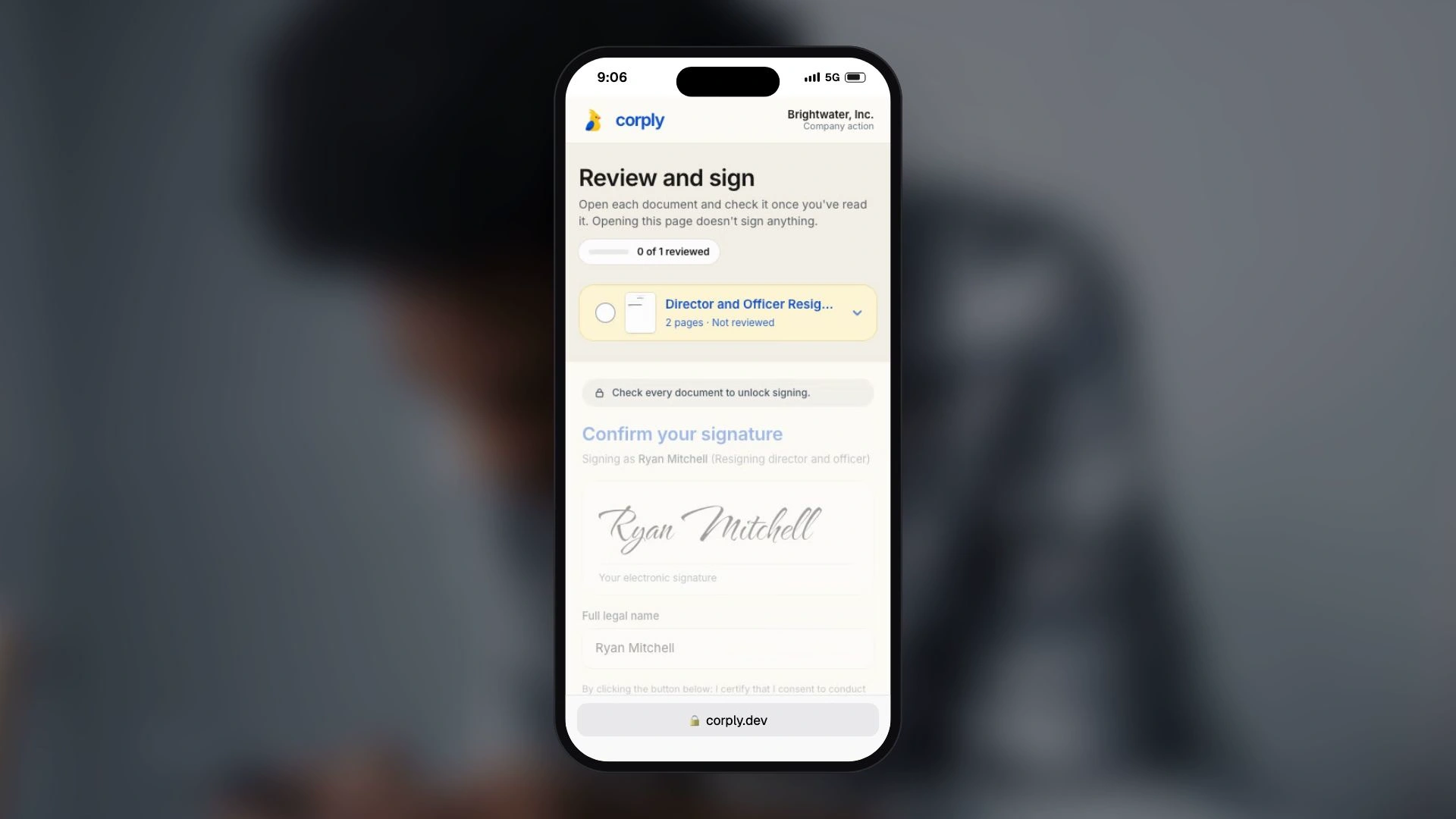
- Review and sign. Corply prepares the applicable resignation, board consent or stockholder consent and tracks each decision. Every signer reviews their own document and authorizes their own signature.
- Check buyback eligibility. The standard formation path requires the founder’s fully signed Corply Restricted Stock Purchase Agreement, a completed departure before the cliff and an open two-month window. You must review acceleration, waivers and transfers.
- Approve and notify. An eligible buyback gets its own board approval and exercise notice. Corply tracks the steps and preserves the documents; proposing it does not move money or change ownership.
Read the agreement itself: Corply’s standard stock agreement includes deemed automatic exercise after two months unless the company opts out. That contract provision and a completed workflow are different things. Confirm the service-termination date with counsel, particularly if a departing officer remains a consultant.
Before starting a buyback, confirm the payment and closing route with Corply. Automatic payouts are not generally available. The receipt-upload route is limited to Corply administrators handling eligible imported companies. Completed supported buybacks produce a receipt and stock-ledger entry, with repurchased shares held in company treasury.
For a departure after the cliff, a negotiated purchase of vested shares or a dispute over the agreement, bring counsel into the transaction. Corply’s current cliff-buyback workflow does not cover those cases.
Ask Corply for the signed agreement and recorded roles first. Mark the service end date and repurchase terms before negotiating a price.
This page is general education, not legal or tax advice, and reading it does not create an attorney-client relationship. Corply is operated by 0Lumen Labs Corp., is not a law firm, and routes questions that need individualized judgment to licensed professionals. Rules and fees change, so verify current requirements with the relevant state, the IRS, or your counsel.