Founder guide
Founder vesting: what you own, what you can lose, and why
Vesting ties part of your ownership to future work. Agree on what happens if someone leaves while everyone still wants to build together.
By Corply · Updated
1. The bargain behind founder vesting
Why vesting exists
Imagine two founders split a company equally because both expect to work on it for years. One leaves after two months. Without an agreed restriction, that person may keep half while the other founder does the remaining work and recruits a replacement. The original bargain has stopped matching reality.
Vesting addresses that problem by making some ownership conditional on continued service. The equity split answers how much each founder gets. Vesting answers how much they keep if they stop contributing early. Cooley explains the founder-departure problem.
Unvested shares can already belong to you
With restricted founder stock, the company issues the shares to you now. The stock purchase agreement gives it a conditional right to buy back the unvested portion if your service ends. As shares vest, that particular repurchase right falls away. You are earning freedom from the restriction, not necessarily receiving new shares every month.
An unexercised option is different: it is a right to buy stock under stated terms. You do not yet own its underlying shares. Exercising an option means buying them; some plans permit early exercise before vesting. Check which instrument you actually hold.
Vested also does not mean liquid. Liquid means you can turn an asset into cash. Private-company shares may have no willing buyer and remain subject to transfer restrictions. A vested stake can still be worth nothing. Corply’s stock agreement expressly retains transfer restrictions after vesting.
What a one-year cliff actually does
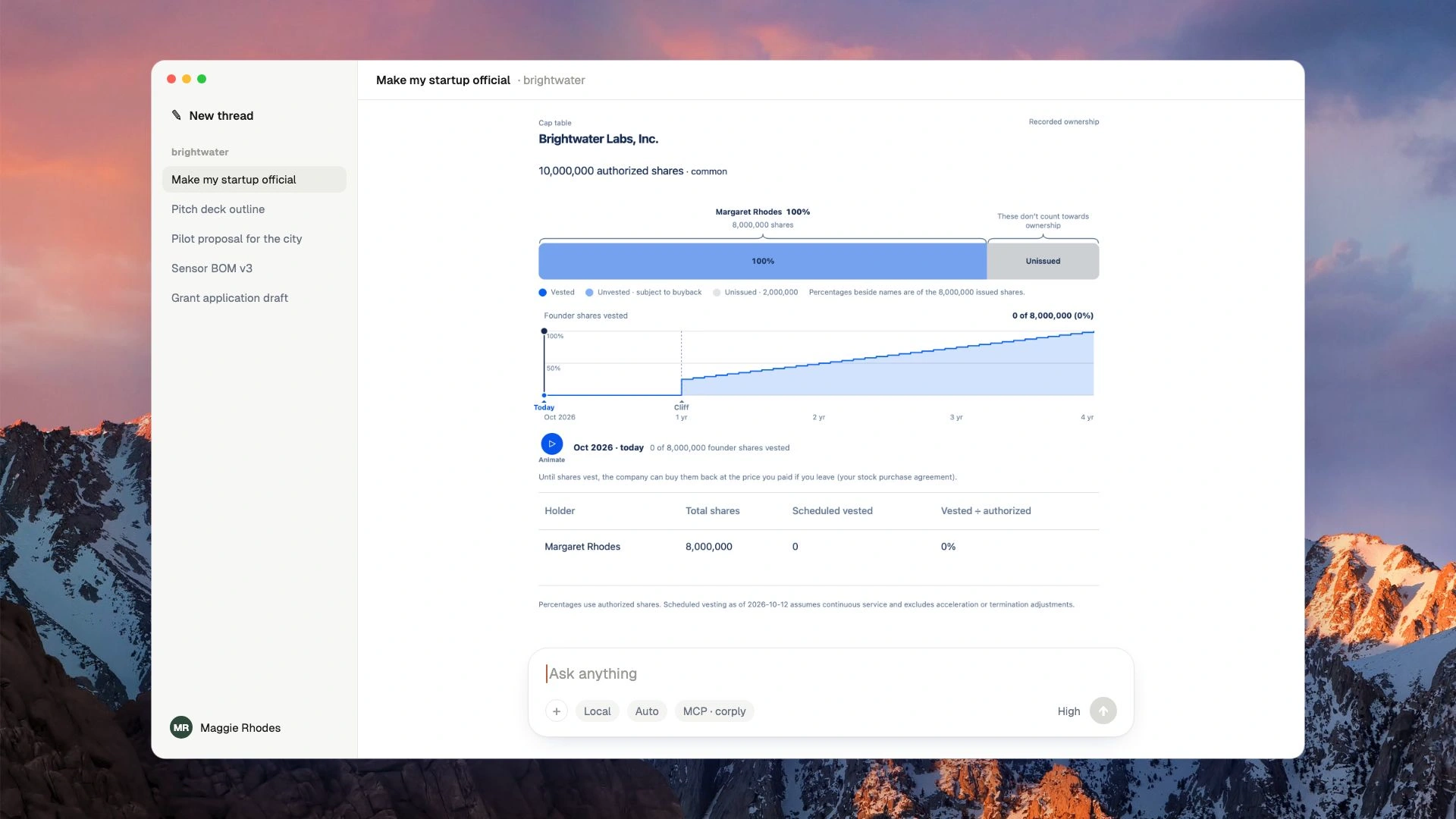
A cliff postpones the first vesting installment. In a four-year schedule with a one-year cliff and monthly vesting afterward, nothing vests before the first anniversary; 25% vests then, followed by 1/48 of the original shares each month. YC describes this common schedule. It is an agreement, not a universal legal requirement.
Hypothetical: a founder buys 48,000 shares at $0.01 each under that schedule. No acceleration, no interrupted service.
| Service completed | Vested shares | Unvested shares |
|---|---|---|
| 11 months | 0 | 48,000 |
| 12 months | 12,000 | 36,000 |
| 18 months | 18,000 | 30,000 |
| 48 months | 48,000 | 0 |
If the founder leaves at month 11 and the agreement permits repurchase at the original price, buying back all 48,000 costs $480. At month 18, that price for the remaining 30,000 is $300. Those calculations do not execute a buyback. The actual agreement determines authority, notices, payment and deadlines.
A cliff protects the company from an early departure, but it also puts a year of a founder’s work at risk. Discuss prior work, service start date and what happens after dismissal. Acceleration means vesting speeds up after specified events; do not assume being fired or selling the company automatically triggers it.
Stock transferred for services also raises a separate tax question. Review the 83(b) election when restricted shares transfer. Waiting for the cliff can miss its 30-day filing window. IRS deadline.
2. How Corply turns the bargain into records
During Delaware C-Corp formation, Corply saves each founder’s equity choices and generates a restricted stock purchase agreement for vesting shares. A founder choosing fully vested shares receives a different stock purchase agreement and skips the vesting-related 83(b) workflow. Your team can mix these choices.
Review the actual agreement and personally authorize your documents. In the standard formation workflow, scheduled vesting starts on Delaware’s accepted formation date. Stock transfer and the tax-election deadline are separate events. A start date in a chart does not prove shares transferred.
Corply’s cap table shows ownership and a vesting timeline. Its scheduled figures assume continued service. They do not decide a disputed termination or apply an undocumented acceleration promise.
When somebody leaves
Corply can prepare a founder departure and an eligible buyback. Its current automated repurchase path is limited to departures before the cliff, within the agreement’s two-month option window. It checks the executed agreement and requires review of acceleration, waivers and transfers.
Departure, board consent, exercise notice and payment remain separate steps. Proposing a buyback does not move money or remove shares. A post-cliff departure, such as the month-18 example, needs separate handling rather than forcing it through this path.
This page is general education, not legal or tax advice, and reading it does not create an attorney-client relationship. Corply is operated by 0Lumen Labs Corp., is not a law firm, and routes questions that need individualized judgment to licensed professionals. Rules and fees change, so verify current requirements with the relevant state, the IRS, or your counsel.