
The founding document
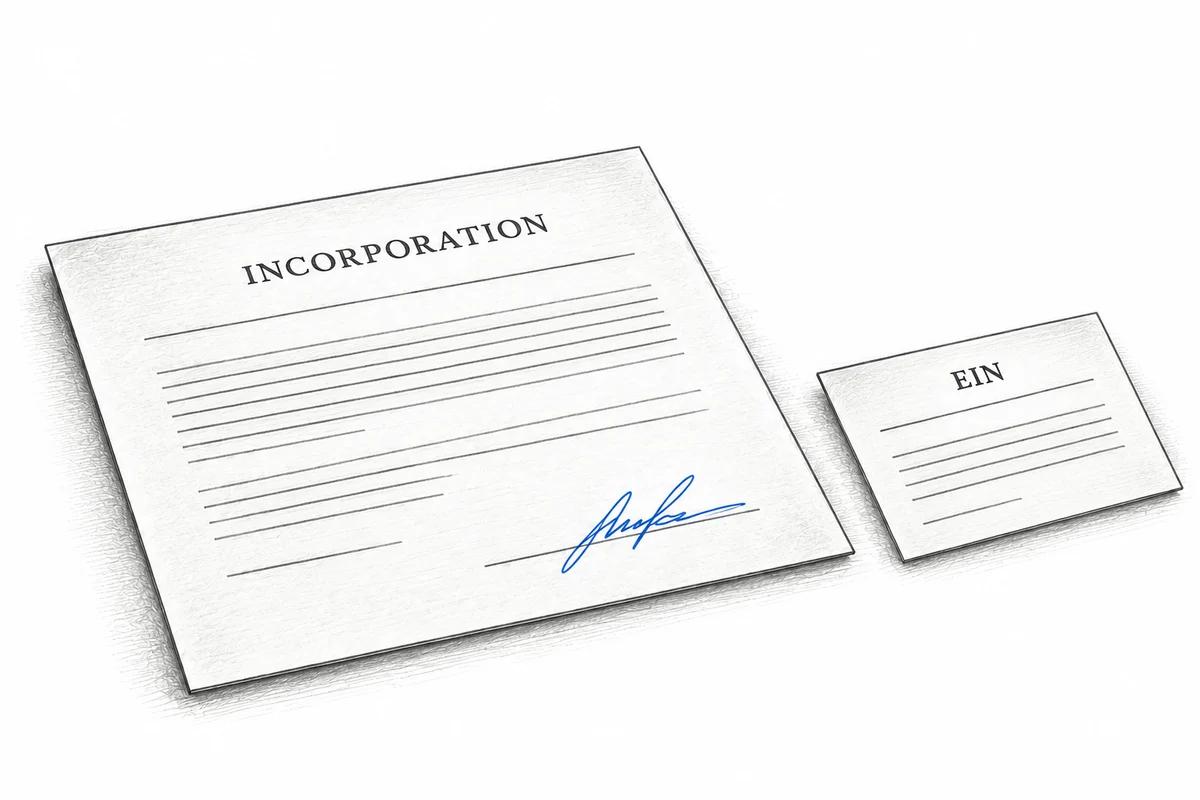
The certificate of incorporation creates the corporation. It is also called the charter, and some states call it the articles of incorporation. Once Delaware's Division of Corporations accepts it for filing, the company exists. Before that, it does not.
The certificate is public; anyone can order a copy from the state. For a new startup it is short, usually two or three pages, because Delaware lets you leave nearly everything to the bylaws and board resolutions. Section 102 of the statute requires only five things: the company's name, the address of its registered office in Delaware and the name of its registered agent, the nature of its business (which may simply be any lawful activity), the number and par value of the shares it may issue along with the rights of each class if there is more than one, and the name and mailing address of the incorporator.
Section 102 also allows optional provisions, such as limits on directors' and officers' personal liability, and some protections can only be placed in the certificate. That is why a startup charter says more than the bare minimum. The next chapter walks through each article.
The incorporator
The incorporator signs and files the certificate (section 103). Under section 107 the incorporator manages the corporation only until directors are named, and in a startup that happens immediately, in a short written action that often adopts the bylaws as well. After that, the incorporator has no role.
The incorporator does not need to be a founder, a stockholder or a director. Lawyers and formation services often act as incorporator. When a founder does it, it has no effect on ownership or control. With Corply, one of the founders serves as incorporator and signs electronically.
Filing
Most certificates reach the Division of Corporations through a registered agent, which submits them through the state's electronic filing system with the filing fee. The fee is set by statute and depends on the number of authorized shares and their par value. Delaware offers expedited processing for an extra fee, from 24-hour service down to one hour.
Standard processing usually takes a few business days. When the state accepts the filing, it stamps the certificate with the date and time and assigns the company a Delaware file number. Keep the stamped copy with the company's records, because banks, the IRS and investors will ask for it. A certificate can name a future effective time up to 90 days after filing (section 103(d)), but most startups want the company to exist right away.
The name
The name must be distinguishable on the state's records from every other Delaware entity, and it must include a word or abbreviation that marks it as a corporation, such as Inc., Corporation, Company or Limited. Check it on the Delaware entity search before you file. Delaware's acceptance says nothing about trademarks, so a name the state accepts can still infringe someone else's mark. Search the USPTO trademark database and the web before you print anything.
Changing it later
The certificate can be amended, but not as easily as the bylaws. Under section 242, an amendment usually needs a board resolution, stockholder approval and a certificate of amendment filed with the state, with a fee. Startups most often amend their charters to authorize more shares or to create preferred stock in a financing, and at a priced round the investors usually replace the whole document with an amended and restated certificate.
Because amendments take time, a well-drafted startup charter authorizes more shares than the founders need on the first day and leaves out provisions the company would quickly outgrow.